Fermi Paradox gave us lots and lots of possibilities. One of the most fascinating answers to the Fermi Paradox is the Dark Forest Hypothesis. It feels impossible, but the theory is interesting.
Where is everybody? And why is our Universe quiet? We only hear the songs of the Universe. Why not another species?
One option is that there is no other civilisation. We discussed this in the Great Filter and the Rare Earth Hypothesis. Another option is that there are multiple civilisations, and they are hiding from each other.

Why? Why do they need to hide from each other?
Consider that you are one of the early human hunters of the prehistoric era in a dark forest. You have a powerful weapon that can kill or temporarily paralyze any living creature you shoot. At the same time, another hunter from another species or another group has an even more powerful weapon or body part that can kill you.
What would you do?
One of the obvious choices is to hide from that predator or hunter. If you reveal your position to others, you may become their next meal.
The Dark Forest Hypothesis discusses this. The nature of living species is competition for resources and energy. This same nature drove humanity to spread all over the world. This hypothesis argues that on other planets there must also be great competition for resources and energy.
If we find another planet, and they also find us, there is a huge possibility that they may attack us if it is a close call. If we have more advanced technology and greater access to energy sources than they do, we have the power to wipe out their civilization or permanently paralyze their development. Even on this single planet, we have driven many species to extinction, not only out of necessity. If they have greater access to energy and resources than we do, then we are doomed.
How do we tell them that we are peaceful creatures? They do not understand what we are saying, and we do not understand what they are saying either.
Even if they have powerful computers that try to translate our messages, it will take a long time to understand the human language, which is extremely difficult. Only in the last decade have we begun to gain some understanding of the languages of other species such as dolphins, whales, orcas, and some monkey species. It is still very difficult to understand them.
Another natural barrier to communication in our vast Universe is the signal delay caused by the finite speed of light.
If we discover another civilization 1,000 light-years away, our only practical way of communication is through radio waves. It takes 1,000 years for our message to reach them. By the time it arrives, our signal may be buried in cosmic noise because of interactions with other astronomical objects. They may hear only noise.
Suppose they have advanced technology capable of filtering our messages. They are already far ahead of our technology. Even then, translation would still be a difficult task for them.
And what if they misunderstand our message of peace and interpret it as a declaration of war?
What would happen?
But the real danger isn’t just a misunderstood message; it’s the threat of a ‘technological explosion.’ Because of the vast distances, an alien species looking at Earth right now might see us as primitive. But they know that in a cosmic blink of an eye, we went from riding horses to splitting the atom. They might strike not because of who we are today, but out of fear of what we might become tomorrow.
If the forest is dangerous, it isn’t because alien armadas are waiting to invade us interstellar travel is far too costly and slow for that. Instead, the Dark Forest relies on ‘sniper shots.’ An advanced civilisation wouldn’t send a fleet; they would simply launch a mass accelerated to near the speed of light. The resulting kinetic impact would destroy a home star completely, neutralising the threat from a safe distance.
These arguments seem absurd. That is exactly why the hypothesis argues that no alien civilization would willingly throw itself into an existential crisis by revealing its location. They remain hidden while continuing to advance according to their material needs.
The Universe may be full of civilizations, but they are hiding from one another. Whenever someone reveals their location, they are struck by invisible arrows and wiped out. Other civilisations witness this and choose to remain silent.
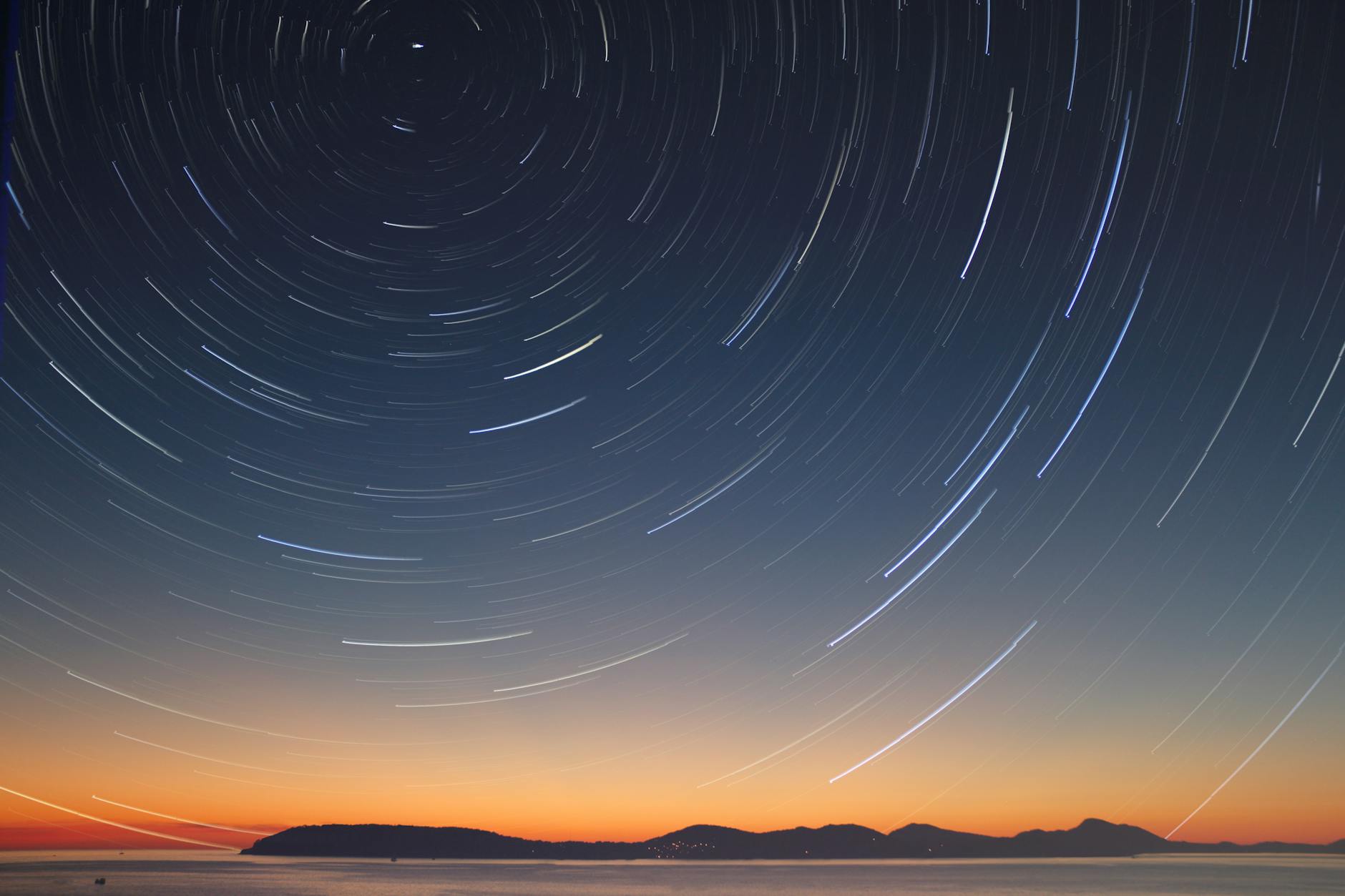
Humanity should also watch from the shadows, observe the night sky, and gain a clearer understanding of the Dark Forest—also known as the Universe.

Why does it seem like a great science fiction theory rather than a likely reality?
One of the strongest arguments is that the world and society are driven by their material needs. Everyone struggles to fulfill those needs. When there are fewer resources and greater human needs, people fight over them.
When humanity has enough resources and energy, many of the world’s problems become less severe. Technological progress should help humanity satisfy its material needs. However, we must also account for inequality within society.
As technology advances, people should become less barbaric. Yet some people still seek war because of greed, power, or diversion. As technology becomes more accessible and wealth is distributed more equally, we should expect fewer conflicts within society.
This is my opinion. Sometimes the opposite may happen.
The greatest argument against the Dark Forest Hypothesis is technological limits.
Our technologies are limited by the speed of light. Even if some civilizations possess extremely advanced technology, their expansion and communication may still be fundamentally limited.
Consider our Solar System. If humanity wants to colonize the entire Solar System, it would be costly, but it is achievable. We have enormous resource banks in the form of planets, moons, asteroids, and other small bodies.
However, if we want to colonize a nearby star system, it would require much more time, energy, and cost.
With today’s technology, it would take nearly 50,000 to 80,000 years to reach Proxima Centauri, which is about 4.24 light-years away.
Even if we could travel at 10% of the speed of light, it would take about 42 years from Earth’s perspective. For the people aboard the spacecraft, the journey would be only slightly shorter because time dilation at 0.1c is very small—about 41.8 years.
That is still more than one human generation and would be extremely risky for the people making the journey.
If we finally reach Proxima Centauri after four decades, we still would not know whether it is suitable for life or merely a barren wasteland that would require terraforming—something that may itself be impossible with any foreseeable technology.
Perhaps technological development itself has practical limits. Some people speculate that future discoveries in physics or quantum science may open entirely new possibilities. Perhaps alien civilisations have already developed such technologies.
But if such extraordinary technologies exist, eventually we should observe some evidence of them. They should occasionally explore nearby star systems. They should leave some clues or technological footprints that are visible to us.
They cannot remain completely hidden forever.
Yet, with all our observations so far, humanity has not found a single confirmed footprint of extraterrestrial civilisation in our cosmic neighbourhood.
Perhaps the Universe is not a Dark Forest after all. Or perhaps we have only just entered the forest and have not yet learned how to see what is hiding among the trees.
Leave a Reply