Almost 3 years ago, me and my roommate were thinking about watching the night sky on top of our hostel at CUTN (Central University of Tamilnadu, India). I am not sure about the date, but I think it was the Gemini meteor showers. And we gathered some seniors and we started counting the small to large meteors. We sat there for nearly 3 hours. And our counts ended at 65 meteors, in that 6 meteors were bright, 4 meteors were big enough to give a small trail, and 1 broke into 2 pieces. That was the first time experiencing a wonderful sky phenomenon. I was thrilled and wanted to check the next day. But the sky was not clear to experience that. For more than one week, that incident circled my heart like a butterfly, making me very happy.

After a long time, I can’t see more than 10 meteors because of work and poor weather conditions (around my area). Today I saw a Mint article discussing the Leonid meteor shower peaking today (19/11/2025). There I got the idea of discussing meteor showers with you.
Let’s begin the exploration.
What are Meteor Showers?
Meteor showers are the debris particles called Meteoroids left by comets when their close calls to the Sun enter our Earth’s atmosphere at very high speed. These meteoroids are very small so they can’t reach land, don’t worry about it hitting you and making a mass extinction event.
There are lots of meteor shower events happening throughout the year. Some years you can get meteor outbursts and meteor storms, numbers exceeding 1500 per hour. They can light up the sky better than firecrackers. But it happens very rarely throughout history.
Some meteor storms get even hundreds of thousands of meteors per hour. That’s enough to light the sky. I want to experience that wonderful astronomical event at least once.
Meteor showers should be first observed by one of the prehistoric creatures with good photoreceptor cells. Some websites say the first people to make a note on meteor showers were Spartans around 1200 BCE. Maybe other humans and civilizations also noticed before. Ancient Chinese civilizations recorded the Lyrids meteor shower, which is the oldest and continuously recorded meteor shower. And ancient Arabs say meteor showers are good omens, meaning they bring good luck. Even I know when I was young, few people said if you saw one it would bring good luck.
In the 1700s only people tried to give some scientific reasoning to this cosmic event. In 1789, Antoine Lavoisier believed that the upper layer of the atmosphere is surmounted by light, flammable gases, which he considers to be the matter and source of luminous meteors.
Les phénomènes qui accompagnent les météores ignés me portent à croire qu’il existe ainsi dans le haut de l’atmosphère une couche d’un fluide inflammable, & que c’est au point de contact de ces deux couches d’air que s’opèrent les phénomènes de l’aurore boréale & des autres météores ignés.
The phenomena that accompany fiery meteors lead me to believe that there exists in the upper atmosphere a layer of a flammable fluid, and that it is at the point of contact between these two layers of air that the phenomena of the aurora borealis and other fiery meteors occur.
— Antoine Lavoisier (Traité Élémentaire de Chimie)
In 1794, Ernst Chladni proposed that meteorites originate from space. Most of the scientists didn’t accept this statement. Few scientists quoted Newton’s statement to deny it, i.e., space should be without any medium to resist the dynamics of planets.
The first human-recorded meteor storm was Leonid during November 1833, estimated as one hundred thousand per hour. Denison Olmsted observed the Leonid meteor storm and explained meteor showers as Earth crossing clouds in space. And he noticed this meteor shower was not seen in Europe and every meteor radiated from a single point in the constellation of Leo. Giovanni Schiaparelli explained the relation between meteors and comets. He showed the Leonid meteor shower is a remnant of comet 55P/Tempel–Tuttle.

With respect to the cause of these meteors, I do not consider it as hitherto explained.
— Denison Olmsted
Biela’s comet, discovered in 1772, made a close call to Earth in 1852 leaving dust particles along its orbit. And Edmund Weiss found the debris orbit intersected with Earth’s orbit in 1872. And the strong meteor shower observed at that time named as Andromedids established the relation between comets and meteors. Nowadays we can calculate the approximate amount per hour and timing of meteor showers.
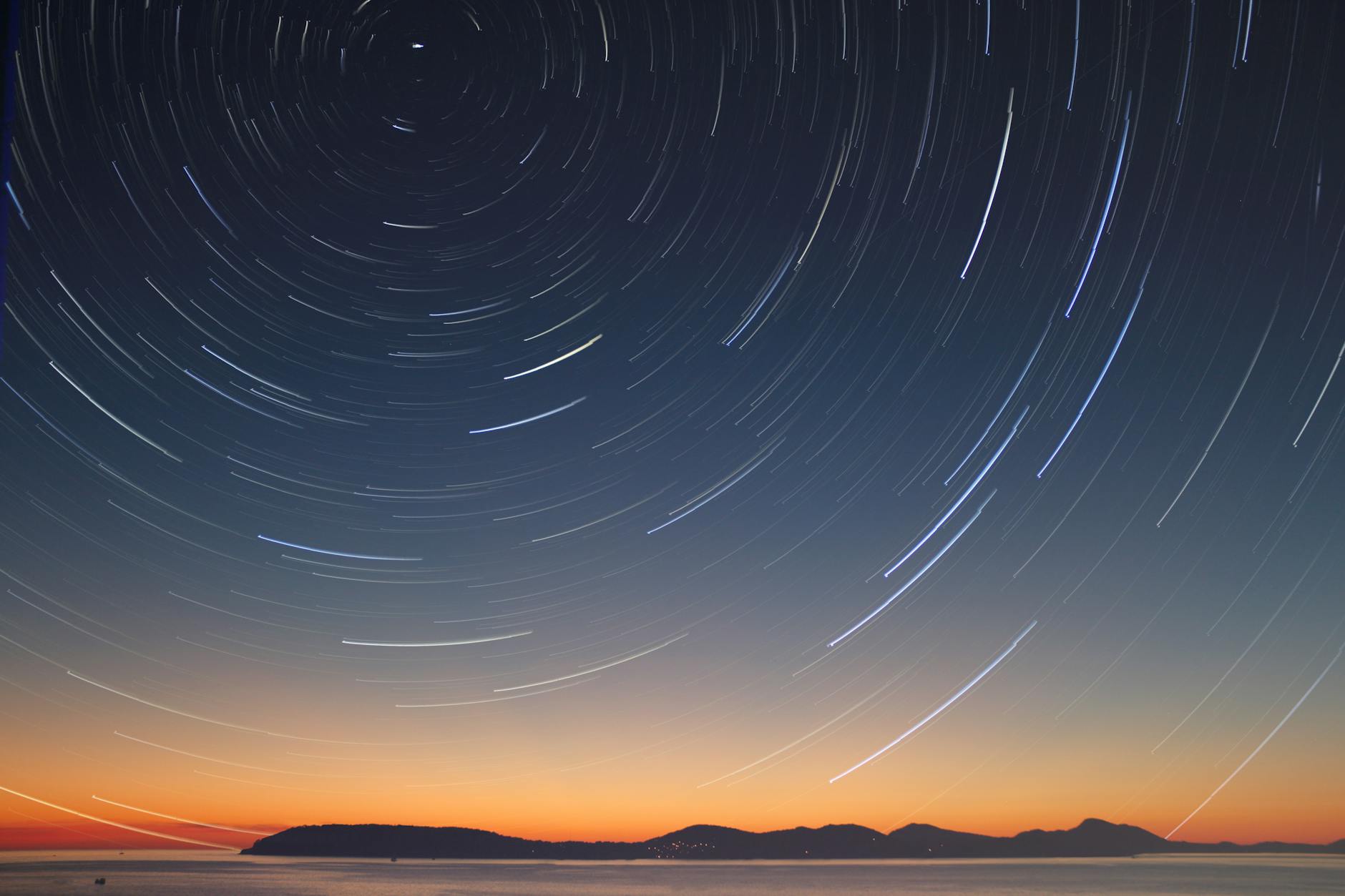
Every meteor shower has the radiant point where the meteors radiate from. And naming them is based on the radiant point. The names are based on the nearest bright star or constellation to the radiant point. Like the meteors radiating from Leo are called Leonids and meteors radiating from Delta Aquarii are called Delta Aquariids. In March 2004 we saw one meteor in the sky of Mars with the help of the Spirit rover.
Just a heads up, maybe you can see a meteorite now.
Really I don’t know how to conclude this article. If you have good weather and a light-pollution-less place, try to explore the wonder of cosmology and think about the dynamics of it. And you can get more info on International Meteor Organization, American Meteor Society, and NASA websites.
I want to see the meteor storms, but I don’t know when I will have the possibility of seeing this very rare event from a place where the weather is unpredictable and there is light pollution. This makes the probability of seeing it very low. I am expecting the days to come.
Leave a Reply